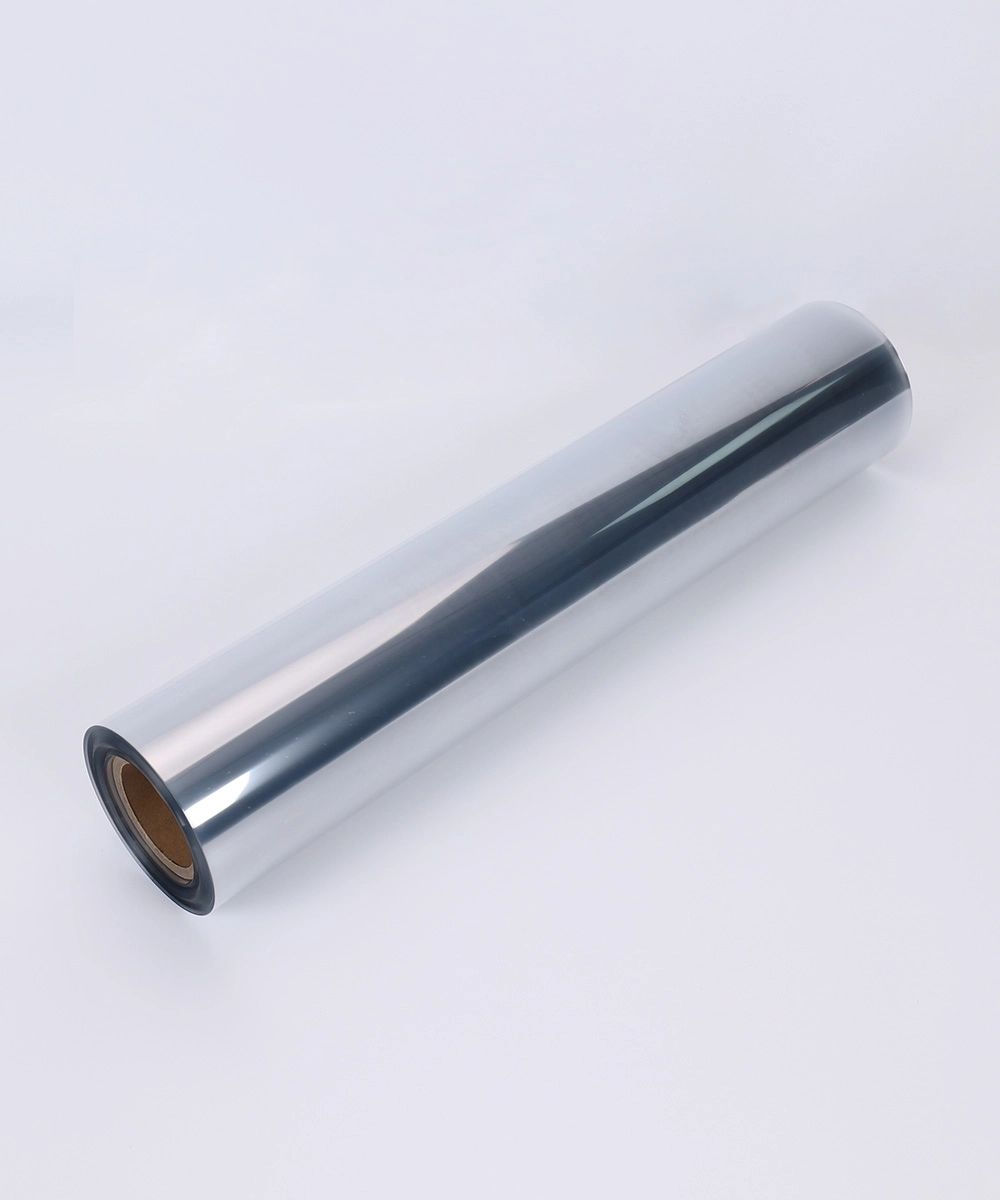



Buyers who search for "matte paper sheets" for industrial packaging often want a sheet that looks and prints like premium paper but does not swell, curl or tear in humid warehouses, chemical environments or cold storage. In practice that usually means a matte-finished synthetic sheet. Matte PET (polyester) is the most common choice.
Why Industrial Packaging Teams Choose Matte PET Over Paper
Paper is cheap and easy to print, but it takes up moisture. PET does not swell, warp or degrade in contact with moisture, so it holds its dimensions through printing and storage. That matters for chemical container tags, parts labels and cleaning-product packaging, where a curled or stained sheet gets rejected on the line.
The matte surface adds three practical benefits:
- Less glare. Barcodes and printed text stay readable under warehouse lighting and scanner lamps.
- Better ink and coating anchorage. A micro-rough surface gives inks and adhesives something to grip, provided the surface energy is right (see below).
- Premium appearance. A matte sheet reads as low-gloss, paper-like stock rather than glossy plastic. Toray markets its soft-touch matte PET for exactly this reason (Packaging World).
How the Matte Finish Is Created
There are three common routes, and they behave differently in use:
| Method | How it works | Best suited for | Watch out for |
|---|---|---|---|
| Matte-filled (in-film) | Fine particles are blended into the PET layer, so the surface is rough from within | Printing, lamination and metallizing substrates | Haze is higher, so clarity drops |
| Matte-coated | A thin matte coating is applied to one or both faces | Soft-touch packaging, premium printed sheets | Coating can scuff under abrasion |
| Embossed or textured | A pattern is pressed in during forming | Anti-slip or decorative inserts | Print registration is harder on deep textures |
Extra-matte biaxially oriented grades are already used for muted metallization, wood-grain effects and labels. One published example is a translucent extra-matte film offered in 19 and 23 µm (Plastemart listing). Rigid sheets for forming or die-cutting are much thicker, so always confirm which product family you are buying.
Technical Specifications That Decide Performance
Ask for a datasheet that states these values and the test method behind each. The ranges below are typical for PET in general and are for orientation only. Confirm exact figures for your grade with the supplier.
| Parameter | Typical reference | Why it matters |
|---|---|---|
| Gloss (60°) | Low values indicate a true matte; test per ISO 2813 or ASTM D2457 | Controls glare and the visual match between batches |
| Haze / opacity | ASTM D1003 for haze | Decides whether the sheet is translucent, frosted or opaque |
| Surface energy | Commonly specified as dyne level (ASTM D2578); corona-treated faces are usually requested for printing | Low values cause ink crawling and weak adhesion |
| Thickness tolerance | Request ± tolerance in µm or mm, not just nominal | Affects die-cutting, feeding and stacking height |
| Tensile strength | Test per ASTM D882 for thin film | Predicts tear and puncture resistance |
| Heat behavior | PET softens near 70–80 °C (glass transition) and melts around 250 °C; oriented grades shrink if exposed to heat | Matters for hot-fill, lamination and heat-sealing steps |
| Moisture uptake | Around 0.6% water absorption is cited for PET (Polyva) | Far lower than paper, so dimensions stay stable in humid storage |
One limit to plan for: PET contains ester bonds, so prolonged exposure to hot water, steam, strong acids or alkalis can degrade it (Polyva). For autoclave or caustic-wash applications, test a sample before committing to a full order.
Choosing the Right Sheet for Your Application
| Application | Recommended matte sheet traits | Key check before ordering |
|---|---|---|
| Chemical or drum labels and tags | Treated matte face, moisture and solvent resistant | Ink and adhesive compatibility with your chemicals |
| Folding boxes and blister cards | Rigid matte sheet with good crease and forming behavior | Forming temperature and crease-cracking test |
| Electronics packaging and separators | Anti-static grade where required | Stated resistivity and the humidity at which it was tested |
| Premium lamination over paperboard | Thin soft-touch or matte-coated film | Adhesive system and lamination temperature |
| Protective interleaving and dividers | Plain matte sheet, tight thickness tolerance | Flatness and edge quality |
Wholesale Ordering Checklist
- Define the process first. State whether you will print, laminate, die-cut or thermoform. This narrows the matte type more than any other factor.
- Specify sheet size and grain/machine direction. Oriented PET can show different shrinkage along each axis.
- Request a pre-production sample. Run it through your own press, die-cutter or laminator, not just a bench test.
- Ask for batch consistency data. Gloss and thickness variation between lots is the main cause of visible mismatch in matte packaging.
- Confirm packing. Interleaved or protective-film-faced sheets on pallets, wrapped against moisture and dust, reduce scratching in transit.
- Check compliance paperwork. If the packaging touches food or ships to the EU or US, ask for the relevant declarations before ordering.
Common Problems and Fixes
| Symptom | Likely cause | Fix |
|---|---|---|
| Ink rubs off | Low surface energy or untreated face | Print the treated side; verify dyne level; ask for a primed grade |
| Visible scuff marks | Matte coatings show abrasion more than gloss | Use interleaving; consider an over-varnish or a harder coating |
| Sheets curl after lamination | Heat or tension imbalance | Lower the temperature; balance construction on both faces |
| Gloss varies between lots | Loose process control | Agree a gloss range and retain a reference sample |
Sustainability Considerations
PET is widely collected and recycled, and recycled-content PET sheets are available from some producers with print quality comparable to virgin material. Mono-material PET packaging is easier to recycle than a multi-layer laminate with paper, so decide early whether your design needs the matte look badly enough to accept a laminated construction.
Work With Us
If you are comparing matte PET sheets for an industrial packaging project, send us your application, sheet size, thickness range and annual volume. We will suggest suitable grades and arrange samples for your own line trials. Start at our website home page to browse our PET film and sheet information and reach our team.
Frequently asked questions
Is matte PET the same as matte paper? No. It is a synthetic sheet that imitates the low-gloss look of paper while resisting moisture and tearing.
Can I print on matte PET with standard inks? Usually only with inks or primers designed for polyester. Always run a rub and adhesion test on a sample.
Is a matte finish less transparent? Yes. Matte surfaces scatter light, so haze rises and see-through clarity falls.